Herniated Disc Treatment in Granada Hills, CA
A herniated disc can cause relentless back, neck, or radiating limb pain that disrupts your work and daily life. At Modern Pain Solutions, Dr. Jungjae Lim specializes in advanced, non-surgical treatments to relieve the nerve compression caused by a herniated disc and help you regain your function and quality of life without surgery or long-term opioid use.
What Is a Herniated Disc?
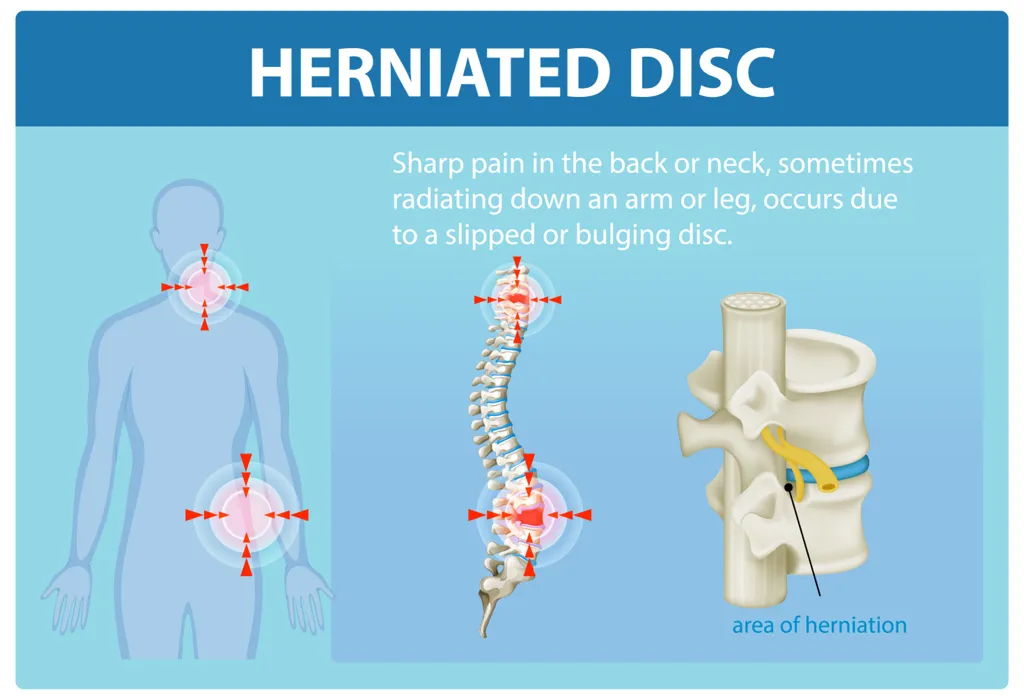
The spinal discs are flexible, cushion-like structures that sit between each vertebra, absorbing shock and allowing the spine to bend and move. Each disc has a tough outer ring (the annulus fibrosus) and a softer, gel-like center (the nucleus pulposus). A herniated disc — also called a slipped or ruptured disc — occurs when the soft inner material pushes through a crack or weak point in the outer ring and protrudes into the spinal canal, where it can press against nearby nerve roots or the spinal cord itself.
Herniated discs most commonly occur in the cervical spine (neck) or the lumbar spine (lower back), and they can cause a spectrum of symptoms ranging from localized pain at the disc level to severe, radiating nerve pain in the arms or legs. At Modern Pain Solutions in Granada Hills, CA , Dr. Lim takes a thorough, imaging-guided approach to identifying the affected disc and delivering treatment that targets the specific pain source.
Causes and Risk Factors
- Age-related disc degeneration and loss of water content
- Sudden trauma from car accidents, falls, or heavy lifting
- Repetitive spinal stress from occupational or athletic activities
- Poor posture and improper body mechanics over time
- Genetics — a family history of disc disease increases risk
- Obesity placing excess load on lumbar discs
Symptoms of a Herniated Disc
- Localized back or neck pain at or near the herniated level
- Radiating pain into the arm (cervical herniation) or leg (lumbar herniation)
- Numbness, tingling, or pins-and-needles in the extremities
- Muscle weakness in the affected arm or leg
- Pain that worsens with bending, lifting, coughing, or sneezing
- In severe cases, loss of bladder or bowel control — seek emergency care immediately
Herniated Disc Treatments at Modern Pain Solutions
Dr. Lim treats herniated discs using targeted epidural steroid injections and nerve blocks to reduce inflammation and relieve radiating pain. PRP therapy and intradiscal injections can support disc healing from within. For structural issues causing persistent nerve compression, minimally invasive spine procedures may be indicated. For chronic neuropathic pain following disc injury, neuromodulation therapy is also available. See our Back & Neck Pain page for additional related services. Call (818) 826-4145 to schedule your evaluation today.
Frequently Asked Questions About Herniated Discs
How do I know if I have a herniated disc?
Common indicators of a herniated disc include back or neck pain at a specific spinal level, radiating pain into an arm or leg following a nerve’s path, and associated numbness, tingling, or weakness. A definitive diagnosis requires imaging — typically an MRI — and a clinical evaluation. Dr. Lim will review your symptoms and imaging at your first visit to confirm whether a herniated disc is the source of your pain and which level is affected.
Can a herniated disc heal without surgery?
In many cases, yes. The body can reabsorb herniated disc material over time, and the majority of herniated disc patients respond well to non-surgical interventional treatments such as epidural steroid injections, physical therapy, and regenerative therapies like PRP. Surgery is typically considered only when conservative and interventional treatments have been exhausted without adequate relief, or when there is significant neurological compromise.
What is the difference between a herniated disc and a bulging disc?
A bulging disc occurs when the disc extends slightly beyond its normal boundary without rupturing — the outer ring remains intact. A herniated disc involves an actual tear in the outer ring through which inner disc material protrudes. Both can cause nerve compression and pain, but a herniated disc typically produces more severe and acute symptoms. Dr. Lim will assess your imaging to determine which you have and recommend the most appropriate treatment accordingly.
How long does it take to recover from a herniated disc?
Recovery timelines vary depending on the severity of the herniation, the level affected, and the treatment used. Many patients with acute herniations notice significant improvement within four to eight weeks of beginning targeted treatment. Chronic or more severe herniations may take longer, and some patients benefit from a staged treatment approach. Dr. Lim will outline a realistic recovery timeline based on your specific diagnosis at your consultation.
Can a car accident cause a herniated disc?
Yes. The sudden, forceful impact of a car accident places extreme stress on the spine and can cause disc herniations — particularly in the cervical spine following whiplash. Herniated discs from auto accidents may not produce significant symptoms immediately, which is why prompt evaluation after any collision is important. Modern Pain Solutions specializes in treating accident-related disc injuries and provides medical documentation for personal injury cases. Lien-based cases are accepted — visit our Personal Injury page.
Are epidural steroid injections effective for herniated disc pain?
Yes. Epidural steroid injections are one of the most well-established and effective non-surgical treatments for herniated disc pain, particularly when nerve compression and inflammation are causing radiating symptoms. By delivering anti-inflammatory medication directly to the affected nerve root, these injections can provide significant, targeted relief — often long enough to allow the disc to stabilize and physical therapy to take effect. Dr. Lim performs all epidural injections under fluoroscopic imaging guidance for precision and safety.
What happens if a herniated disc is left untreated?
Leaving a herniated disc untreated — especially when it is causing nerve compression — can allow the condition to worsen over time. Chronic nerve irritation can lead to persistent numbness and weakness, reduced function, and in serious cases, permanent nerve damage. Long-term pain can also disrupt sleep, limit physical activity, and contribute to secondary issues such as muscle deconditioning and psychological distress. Early evaluation and appropriate treatment at Modern Pain Solutions helps prevent these outcomes. Call (818) 826-4145 to schedule your appointment.