Epidural Steroid Injections After a Car Accident: What You Need to Know
One of the most common treatments recommended for accident victims with radiating back or neck pain is an epidural steroid injection (ESI). Despite how frequently they are performed, many patients — and even some attorneys — have questions about what these injections actually do, why they are used, and how they factor into a personal injury case. This post answers those questions.
What Is an Epidural Steroid Injection?
An epidural steroid injection delivers a corticosteroid anti-inflammatory medication into the epidural space of the spinal canal — the space surrounding the spinal cord and nerve roots. When a car accident causes a disc herniation or spinal nerve root compression, the affected nerve root becomes inflamed. This inflammation is what generates the radiating pain, numbness, and tingling that travels from the neck into the arm, or from the lower back into the leg.
An ESI places anti-inflammatory medication precisely at the site of the inflamed nerve root — achieving targeted relief that oral medications simply cannot match because they must travel through the bloodstream and reach the site of inflammation at much lower concentrations.
Why Car Accident Victims Often Need Epidural Injections
The forces generated in a car accident — even a relatively low-speed rear-end collision — are sufficient to cause cervical or lumbar disc herniations. When a disc herniates, it presses on the nerve roots in the spinal canal, triggering the nerve inflammation that ESIs are designed to address. Epidural injections are therefore indicated for accident patients with:
- Radiating arm pain (cervical radiculopathy) from a neck injury
- Sciatica — radiating leg pain from a lumbar disc herniation
- Nerve root compression confirmed on MRI or clinically evident on examination
- Post-traumatic spinal stenosis contributing to nerve compression
How ESIs Are Performed — The Importance of Imaging Guidance
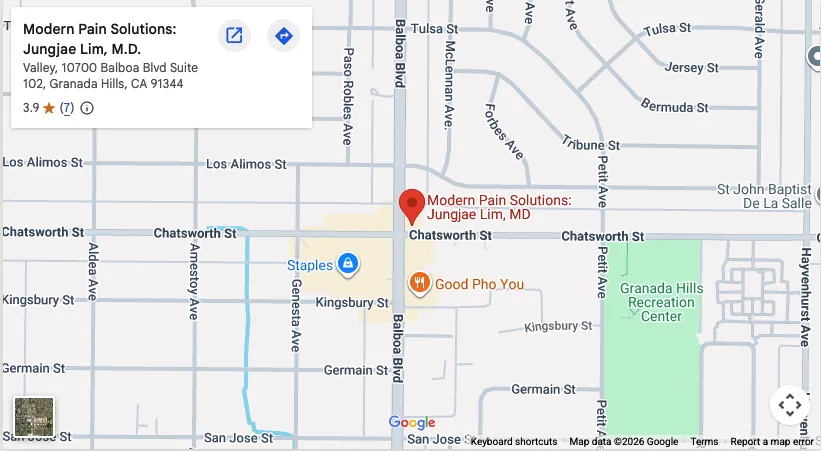
At Modern Pain Solutions in Granada Hills, all epidural steroid injections are performed under fluoroscopic (live X-ray) guidance. Fluoroscopic guidance allows Dr. Lim to visualize the needle in real time and confirm its precise placement in the epidural space before medication is delivered. This is the standard of care for ESIs — and it is important for both safety and accuracy.
Patients who receive ESIs without imaging guidance — for example, in some urgent care or chiropractic settings — may receive medication that is not delivered to the correct anatomical target, reducing effectiveness. At Modern Pain Solutions, imaging guidance is used for every injection.
Types of ESIs and Their Role in PI Cases
There are three main approaches to epidural steroid injections — interlaminar, transforaminal (selective nerve root block), and caudal — each with different target zones and diagnostic implications. The transforaminal approach is particularly important in personal injury cases because it targets a specific nerve root level, and a positive diagnostic response helps confirm which disc level is herniated and symptomatic. This level-specific confirmation is valuable documentation for your attorney. See our full Epidural Steroid Injections page.
How Many ESIs Will I Need?
Most patients receive one to three injections in a series, spaced several weeks apart. The number depends on your response to the first injection and the severity of your nerve compression. Some patients achieve sufficient relief with a single ESI; others require the full series to achieve maximum benefit. Dr. Lim evaluates your progress after each injection and adjusts the plan accordingly.
ESIs and Your Legal Case
Epidural steroid injections are valuable in personal injury cases for two reasons. First, they provide documented, clinician-supervised, physician-authored evidence of the nerve root injury and its clinical significance. Second, the number and type of injections required reflects the severity and persistence of the injury — contributing to the damages documentation in your claim. Insurance carriers and defense attorneys are familiar with ESIs and understand what they indicate about the nature of the injury.
Lien-Based ESIs at Modern Pain Solutions
Modern Pain Solutions accepts lien-based cases for accident patients requiring epidural steroid injections — no health insurance required, no upfront cost. Call (818) 826-4145 to schedule your evaluation. Dr. Lim sees accident patients quickly and provides the full documentation your personal injury case requires.
Related: Epidural Steroid Injections | Herniated Disc After Accident | Personal Injury Pain Management