Herniated Disc From a Car Accident: Symptoms, Treatment, and What It Means for Your Personal Injury Case
A herniated disc is one of the most serious and most commonly disputed injuries in personal injury cases. Insurance companies routinely argue that disc herniations are pre-existing degenerative findings unrelated to the accident. Understanding what a traumatic disc herniation actually is, how it differs from degenerative disc disease, and how it is properly diagnosed and treated will help you advocate effectively for your health — and your legal rights.
What Is a Disc Herniation?
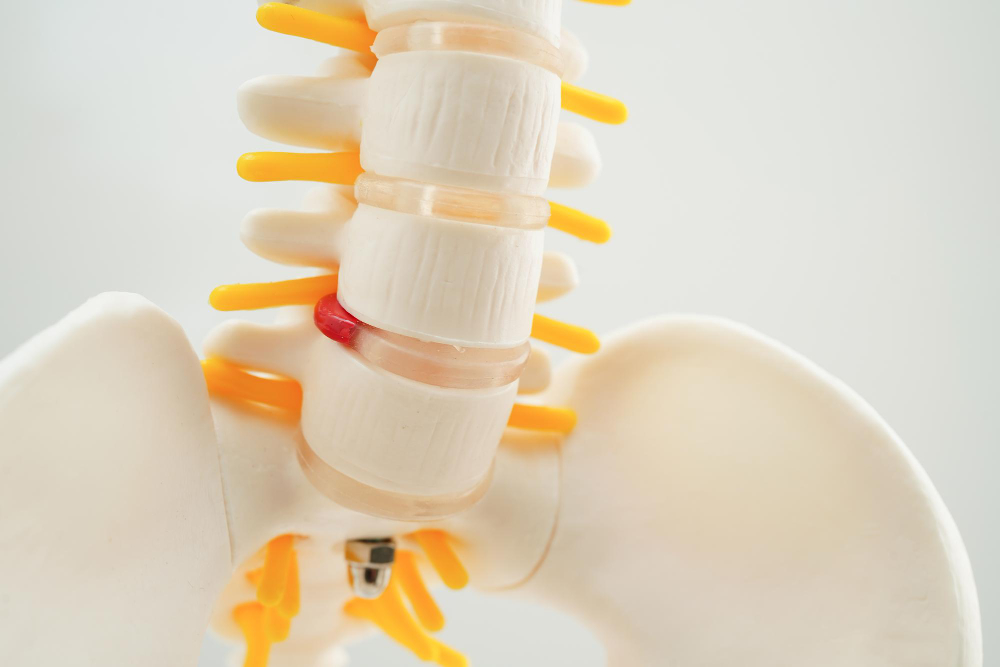
The intervertebral discs sit between each pair of vertebrae in the spine, acting as shock absorbers. Each disc has a tough outer ring (annulus fibrosus) and a soft gel-like inner core (nucleus pulposus). A herniation occurs when a tear in the annulus allows the nucleus to push outward — and potentially into the spinal canal, where it can compress the nerve roots or spinal cord.
How Car Accidents Cause Disc Herniations
The sudden compressive, extension, and flexion forces generated in a car accident can exceed the structural limits of a spinal disc in milliseconds. Rear-end collisions generate cervical disc herniations through the rapid hyperextension-hyperflexion mechanism. Frontal and side-impact collisions generate lumbar disc herniations through axial loading and flexion forces. Even discs that have some pre-existing degeneration — common in adults of all ages — can be herniated traumatically by these forces.
Symptoms to Watch For
The hallmark symptom of a disc herniation is radiating pain — pain that travels from the spine into an arm or leg along the path of the compressed nerve. This is accompanied by numbness, tingling, and in more severe cases, muscle weakness. Some disc herniations cause primarily local neck or back pain without significant radiation. Symptoms may not reach their full intensity immediately after the accident.
The Pre-Existing Condition Defense — And How to Address It
Insurance adjusters and defense experts frequently argue that disc herniations seen on MRI were present before the accident and are unrelated to the collision. This argument is often made even when the patient had no symptoms before the accident. At Modern Pain Solutions, Dr. Lim is experienced in writing causation opinions that directly address this argument — analyzing the mechanism of injury, the type of disc pathology present on imaging, the temporal relationship between the accident and symptom onset, and the clinical evidence of acute versus chronic changes.
Under California’s eggshell plaintiff doctrine, a defendant is liable for the full extent of harm caused — even if a pre-existing condition made the plaintiff more vulnerable. If the accident herniated or significantly aggravated a disc that was previously asymptomatic, the defendant is responsible for that outcome. Dr. Lim’s documentation reflects this standard.
Treatment at Modern Pain Solutions
Dr. Lim takes a non-surgical first approach to accident-related disc herniations. Epidural steroid injections — particularly transforaminal selective nerve root blocks — are the primary interventional treatment for disc herniations causing nerve root pain. PRP therapy is available for disc tissue healing. Spinal cord stimulation is an option for chronic refractory pain. Surgery is considered only when non-surgical options are exhausted or when neurological deficits are severe.
All treatments are available on lien for qualified personal injury patients. See our Herniated Disc After Accident page or call (818) 826-4145 to schedule a rapid evaluation at our Granada Hills office.
Why Prompt Evaluation Matters
From both a medical and legal standpoint, prompt evaluation following an accident is critical. Medically, untreated disc herniations can progress — with worsening nerve compression potentially causing permanent neurological damage. Legally, every day between the accident and your first medical evaluation is a vulnerability in your case that defense counsel will exploit. Modern Pain Solutions sees accident patients quickly and accepts lien-based cases — call (818) 826-4145 today.
Related: Herniated Disc After Accident | Epidural Steroid Injections | Personal Injury Pain Management | For Attorneys